


Upper House Hong Kong — André Fu’s Urban Sanctuary Above the City
- Andrew C.

- Apr 18
- 6 min read

In Hong Kong, the city rises in relentless layers—glass, steel, movement, density. The rhythm is immediate, constant, and rarely negotiable.
Which is precisely why Upper House Hong Kong holds such a distinct position.
Set above Admiralty’s Pacific Place complex, the property occupies one of the most active districts in the city. Yet from the moment you begin the ascent, the atmosphere shifts. A sense of composure. Space that feels deliberate. Stillness, carefully constructed.
This is not simply the advantage of elevation. It reflects a design philosophy grounded in a deeper understanding of the city—one that responds with clarity, proportion, and calm.
Designed by André Fu, the property was never conceived as a conventional hotel. From the outset, it was imagined as a residence in the sky, where scale, proportion, and materiality work together to soften the intensity below. More than a design project, it became a defining expression of Fu’s philosophy—one that would later shape his global language.
The ascent unfolds gradually, almost cinematic in pace. Light shifts. Sound recedes. The city softens into abstraction. By the time you arrive, Hong Kong remains present, yet no longer immediate.
What follows is a different condition entirely—one defined by composure, felt instantly.


Upper House Hong Kong:
A Study in Proportion, Light, and Space
André Fu’s work at Upper House Hong Kong carries a clarity that feels both deeply personal and universally legible.
The palette is restrained yet warm—pale timber, limestone, soft textiles—materials that absorb light rather than reflect it. Spaces unfold with precision. Nothing interrupts the visual flow, yet nothing feels reduced for effect. The design operates through balance—between openness and enclosure, between stillness and movement.
A dialogue between East and West runs throughout.
From a Western perspective, the proportions feel generous, almost residential in their openness. From an Eastern perspective, there is a sensitivity to sequence, to balance, to the emotional weight of space. Together, they form a language that avoids overt reference while remaining culturally grounded.
This is most evident in the public areas. Volumes expand without overwhelming. Lines remain clean without feeling austere. Light moves gradually across surfaces, shifting the atmosphere throughout the day. Even at scale, everything remains anchored in human proportion.


The rooms carry this philosophy into a more intimate register.
Among the largest in Hong Kong, their sense of space is defined less by size than by layout, flow, and perspective. Each room opens outward, drawing the skyline into the interior experience. Furniture sits low and deliberate. Materials remain consistent. Transitions between living, resting, and bathing unfold without interruption. There is a sense of inhabiting the space fully.
The bathroom continues this dialogue, stone, glass, and light forming an environment that feels closer to a private retreat than a functional space.
In the André Fu Suite, the narrative becomes more personal. Objects, textures, and spatial decisions reflect his own sensibility—his attention to proportion, his precision in detail, his preference for a form of luxury that reveals itself gradually. The suite reads less as a statement, more as an extension of a way of living.
What remains constant throughout is control—of light, of space, of rhythm—held with quiet consistency.





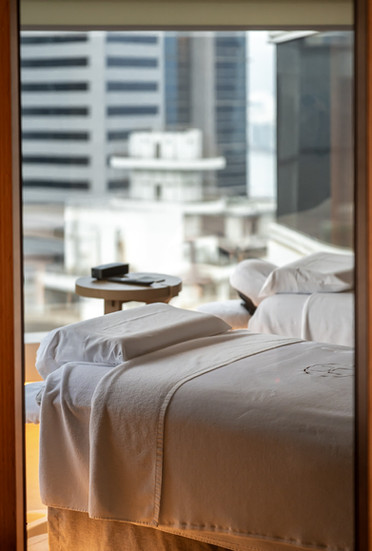

Urban Wellness: A Contemporary Practice in the Sky
Wellness at Upper House Hong Kong extends across the property, integrated into daily life and highly personal.
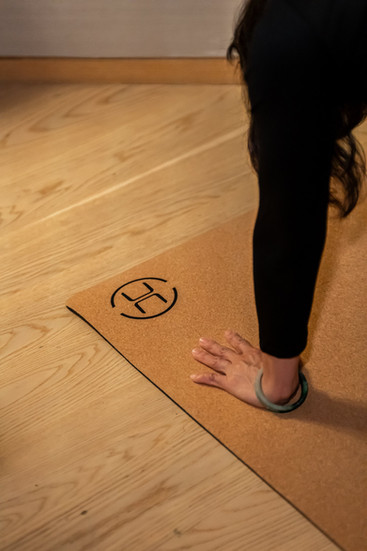
It begins in the room. A yoga mat is always present, placed with subtle intention. Movement happens naturally, without structure or expectation. On weekends, the Sky Lounge hosts yoga sessions open to both guests and the local community. The setting is elevated yet grounded, where the skyline frames each movement and the boundary between private and shared experience becomes fluid.
From there, the wellness offering broadens into a layered, contemporary program.
Within Pacific Place, 10x Longevity introduces a more technical dimension—hyperbaric oxygen therapy, red and near-infrared light treatments, and advanced facial protocols—each addressing the physical impact of urban living with precision.
Alongside this, the experience shifts into something more intuitive.




Energy-based practices by Stone & Star, including crystal work, tarot and card readings, and guided sessions, create space for reflection and recalibration. Traditional Chinese Medicine-informed treatments and body alignment therapies add further depth, grounding the program in both local and global perspectives.
Scientific, holistic, and introspective practices sit alongside one another, allowing each guest to move at their own pace. The approach reflects a more contemporary understanding of well-being, one that accepts complexity rather than reducing it.
In a city defined by density, this creates something increasingly rare:
a place where the body slows, while the city continues below.


A System of Intimacy: Service as Intuition
At Upper House Hong Kong, service begins long before arrival becomes visible.
There is already a sense of continuity in motion. From the airport, the transition feels considered. A house driver is waiting, aware of timing and context. A quiet question follows: would you prefer something prepared upon arrival?
By the time you reach the room, the answer has already taken form.
Food reflects preference. The space feels settled. There is no adjustment period, no need to request. You arrive in an environment that feels already aligned.
This attentiveness continues throughout the stay, though never in a way that draws attention to itself.
Despite the building’s vertical scale, the experience remains remarkably close. Movement through the property creates familiarity. Interactions build naturally. Conversations resume rather than restart.
Preferences are remembered. Timing is precise. Communication between the team is seamless, yet invisible. Nothing needs to be repeated, and nothing feels overlooked.
The team itself is international, yet unified in tone and delivery. There is a clarity in how they engage, measured, intuitive, and free from unnecessary formality.
The scale of the property never translates into distance. Instead, it allows for a carefully maintained intimacy, where each interaction feels considered without feeling orchestrated.
In practice, it results in something simple: A stay where you feel understood without explanation.


Culinary Perspective Above the Skyline
At Salisterra, Mediterranean influences meet Hong Kong’s skyline in a setting that feels both vibrant and composed. Materials, textures, and light echo the broader design language, while the atmosphere shifts gradually from day to evening. The city re-enters here as context—present, yet no longer overwhelming.
The menu reflects the same clarity. The Galician octopus, layered with vadouvan curry, yoghurt, and pomegranate, is structured and expressive. The Andalusian sea bass, salt-baked and finished tableside with a Pernod flambé, introduces a moment of controlled theatre. The pineapple tarte tatin, caramelized and paired with vanilla ice cream, closes with warmth and precision.
Beyond the main dining room, the experience moves inward. The Green Room offers a more intimate setting for smaller gatherings and quieter exchanges, a pause within the vertical rhythm of the city. The Chef’s Room brings the experience closer still. With only a handful of seats, it places guests in direct proximity to the kitchen through evolving menus and visiting residencies. Dining shifts from observation to participation. Alongside it, The Tea Room introduces a softer, more informal cadence, anchoring the daytime rhythm with a sense of ease that complements the more immersive experiences elsewhere.
Each space establishes a different relationship to the city and to dining itself. From the openness of Salisterra, to the quiet of the Green Room, to the immediacy of the Chef’s Room, the progression feels deliberate.


A House Above the City
What defines Upper House Hong Kong is the precision of its alignment.
Design, space, wellness, and service operate within the same language. Nothing competes for attention. Nothing feels excessive. Each layer supports the next.
Within one of the most dynamic cities in the world, the property offers a different proposition: not escape, but recalibration.
A place where the intensity of Hong Kong remains visible, yet no longer dictates the experience. A place where design softens the environment, service anticipates without intrusion, and wellness becomes part of daily rhythm.
Above it all, Upper House Hong Kong holds a distinct position: a state of being.


Comments