


Through Malaysia by Rail — Aboard Belmond's Eastern & Oriental Express
- Andrew C.

- May 18
- 7 min read
Updated: 4 days ago
In an era shaped by speed, efficiency, and immediacy, many journeys have become transitional spaces designed primarily around arrival. Airports blur into lounges, highways dissolve into infrastructure, and increasingly, the emotional experience of travel feels compressed by urgency and acceleration.
The Eastern & Oriental Express by Belmond offers an entirely different pace.
Earlier this spring, we boarded the deep green train at Woodlands Station in Singapore for the four-day journey through Malaysia and back again, departing slowly from the city’s sharp vertical skyline into softer landscapes of jungle, fishing villages, palm plantations, and limestone coastlines. Almost immediately, the atmosphere began to shift. Conversations slowed. Phones disappeared. Hours became shaped by observation and rhythm.
The Eastern & Oriental Express carries the glamour of historic rail travel while quietly reshaping one’s relationship with movement, observation, and time itself.
The journey shifts away from destination and toward immersion.



Reviving the Romance of Rail Travel
The Eastern & Oriental Express belongs to a larger lineage of grand rail journeys that once defined international travel. Its origins can be traced back to James Sherwood, the visionary American entrepreneur who revived the Venice Simplon-Orient-Express in 1982 and helped restore the golden age of luxury rail travel for a contemporary generation. Inspired by the craftsmanship and romance of historic European sleeper trains, Sherwood later expanded the concept into Southeast Asia, launching the Eastern & Oriental Express in 1993 as a rail journey connecting Singapore, Malaysia, and Thailand.
Bringing that vision to Southeast Asia introduced immense logistical complexity. Operating a luxury sleeper train across tropical climates, dense jungle terrain, multiple borders, and aging railway infrastructure required intricate systems involving water supply, climate control, maintenance, onboard storage, and preservation of delicate historical carriages under humid equatorial conditions. The result became one of the world’s most evocative rail experiences, deeply connected to Southeast Asia’s landscapes and cultural textures.
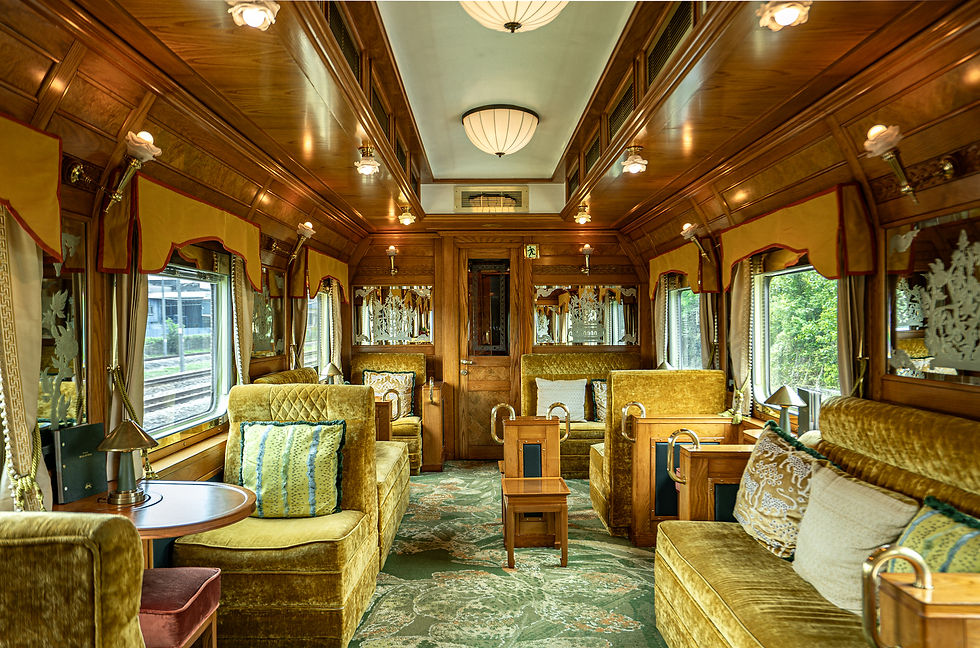
Inside, restored carriages reveal polished cherrywood paneling, lacquered marquetry, Thai silks, Malaysian embroidery, brass detailing, and softly illuminated corridors that evoke another era while remaining remarkably alive in the present. The observation carriage remains among the train’s defining spaces: an open-air carriage at the rear where guests gather throughout the day to watch jungle landscapes, villages, and shifting skies slowly disappear behind the train.
History aboard the Eastern & Oriental Express feels alive, and the train moves with continuity, atmosphere, and emotional warmth that carry the elegance of classic rail travel into a distinctly contemporary Southeast Asian context.


Interiors in Motion
One of the most compelling aspects of the Eastern & Oriental Express is the intimacy of its interiors. Where contemporary luxury hospitality often emphasizes scale and spectacle, life aboard the train is shaped through warmth, tactility, and intimacy. Cabins remain compact yet remarkably composed, balancing practical limitations with comfort through thoughtful detailing and residential sensibility.
Throughout the journey, light becomes part of the design language itself. Morning sun filters softly across embroidered fabrics and vintage wood panels. Tropical shadows drift across cabin walls as the train cuts through dense jungle landscapes. Evenings bring a more cinematic atmosphere as warm lamps glow against polished surfaces and reflections ripple gently with the movement of the rails.
The Eastern & Oriental Express carries a lived-in elegance shaped through movement, intimacy, and continuity. Beyond the interiors, the landscapes remain the emotional center of the journey.
Over four days, Malaysia unfolds gradually through the train's windows in shifting fragments: dense rainforest, weathered rural stations, fishing villages, palm plantations, limestone cliffs, rubber trees, tropical storms gathering in the distance, and long stretches of jungle where the outside world feels suspended in stillness.
The slowness of rail travel transforms observation itself.


Dining by André Chiang — A Culinary Journey of Spices
Dining aboard the Eastern & Oriental Express forms another essential layer of the journey.
Created by Chef André Chiang, the culinary program draws inspiration from the historical spice routes and cultural intersections that have long shaped Southeast Asia. Titled The Journey of Spices, the menus reinterpret regional flavors through a contemporary lens while remaining deeply connected to local sourcing, seasonality, and sustainability.
Much of the produce served aboard the train is sourced throughout Malaysia and the surrounding region, including seafood, tea, coffee, chocolate, and sustainably certified ingredients carefully adapted to the operational realities of life aboard a moving train. Storage limitations, tropical climates, onboard logistics, and water management systems shape every aspect of the culinary experience, adding another layer of precision behind the scenes.
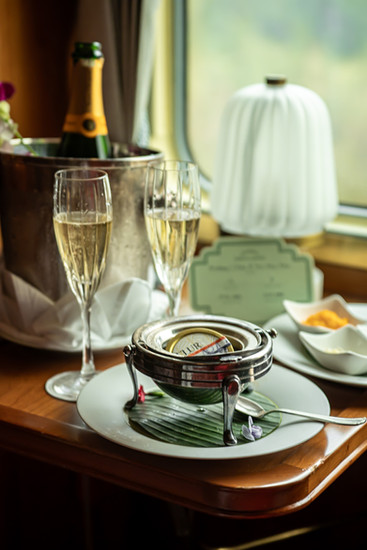
Dining aboard the train moves seamlessly alongside constantly shifting scenery: white tablecloth breakfasts framed by jungle landscapes, elegant lunches set against rural villages and palm plantations, and candlelit dinners accompanied by piano music, silver service, and the gentle movement of the rails.
The menus trace the cultural layers of Southeast Asia with both refinement and emotional warmth. A shrimp and clam miso bisque layered with tofu, kai-lan, and wakame carries remarkable depth and clarity, while sixteen-hour braised beef cheek finished with nine pepper jus reflects Chiang’s ability to reinterpret regional spice profiles with contemporary precision. Elsewhere, steamed red snapper with pickled wild Chinese olives and cilantro pesto introduces brightness and restraint, while the deeply comforting Chinese braised pork belly served with goose oil baked pilaf evokes a quieter sense of nostalgia and home.
Lunches continue that dialogue between regional memory and modern technique: seafood laksa fried rice layered with tiger crayfish, squid, scallop XO, and coconut blancmanger paired with Nyonya chendol subtly references the multicultural culinary influences woven throughout Malaysia itself.
Dining aboard the Eastern & Oriental Express ultimately becomes inseparable from the journey itself: a continuous dialogue between gastronomy, landscape, history, and cultural memory across Southeast Asia.


Encountering Malaysia Beyond the Train
The journey aboard the Eastern & Oriental Express also opens a deeper connection to contemporary Malaysia itself.
As the train pauses throughout the route, the experience expands into a series of carefully curated cultural encounters, revealing the country’s layered identities beyond the polished interiors of the carriages.
In George Town, Penang, those contrasts feel especially vivid.
Colonial facades stand beside contemporary art spaces, mural-covered alleyways intersect with living heritage districts, and generations of cultural influence continue shaping the city’s identity in real time. At Hin Bus Depot, artists, designers, and local creatives reflect a younger contemporary energy emerging within Penang’s evolving cultural scene, while the Teochew Puppet & Opera House preserves older traditions through handcrafted puppetry, opera costumes, and oral storytelling practices that continue carrying cultural memory forward.
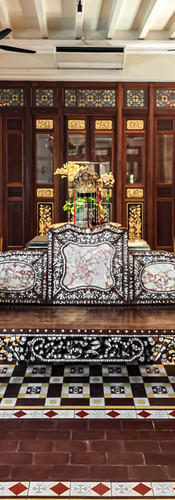
At Seven Terraces, one of the city’s most beautifully restored Peranakan heritage houses, original antiques, carved furnishings, embroidered textiles, and historical artifacts reveal the extraordinary depth and complexity of Peranakan culture beyond surface aesthetics alone.




Elsewhere, the journey softens again. In Langkawi, movement gives way to stillness as guests travel by boat toward Tanjung Rhu’s calm sandy shoreline framed by limestone islands, mangroves, and distant jungle-covered cliffs. The atmosphere feels meditative against the rhythm of the train itself, offering a quieter portrait of Malaysia shaped by nature, silence, and elemental beauty.
Passing through Ipoh introduces another layer of the country’s identity. Colonial architecture, fading shophouses, old railway heritage, and landmarks such as the Birch Memorial Clock Tower reveal traces of Malaysia’s historical complexity while cafés, galleries, and creative spaces hint at a city rediscovering itself through contemporary renewal.
Together, these excursions transform the Eastern & Oriental Express into far more than a rail journey. The train becomes a moving thread connecting multiple versions of Southeast Asia simultaneously: historical and contemporary, urban and rural, preserved and evolving.


Dior Spa and the Evolution of Contemporary Rail Travel
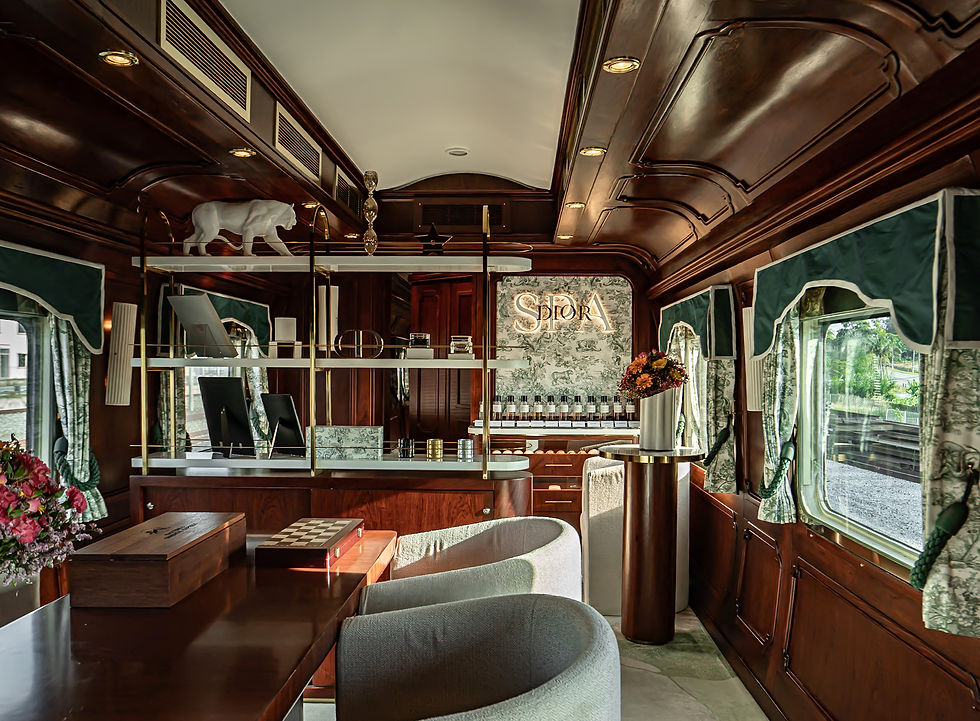
The recent introduction of Asia’s first Dior Spa further reflects how the Eastern & Oriental Express continues to evolve with contemporary luxury travel.
Wellness aboard the train becomes integrated into the rhythm of movement itself, offering treatments designed around restoration, stillness, and sensory calm. The experience feels aligned with a growing desire among modern travelers for emotional well-being, slower immersion, and intentional forms of luxury.
Throughout the journey, the balance between heritage and contemporary wellness feels remarkably natural. The Eastern & Oriental Express continues to preserve the emotional intimacy and timeless rhythm that define its identity while embracing a more contemporary vision of slow luxury travel.


The Human Element
What remained with us most, however, was the extraordinary attentiveness of the onboard team.
Life aboard the Eastern & Oriental Express requires an immense level of coordination operating quietly behind the scenes at every hour of the day. Under the leadership of hotel manager Wolfgang, alongside Petra and the wider team, the experience moved with remarkable fluidity despite the constant operational complexity of life aboard a moving train.
Cabins transformed continuously between living lounge and sleeping quarters, often several times within a single day. Behind each transition existed layers of unseen preparation, timing, movement, and care carried out with precision and calm. Throughout the journey, the team developed a deep understanding of each guest’s individual rhythms and preferences, anticipating needs almost instinctively while maintaining a warmth that never felt performative.
What makes the Eastern & Oriental Express especially unique is the intimacy created through shared movement and shared space.
Unlike a traditional hotel, life aboard the train exists within a carefully orchestrated environment where guests and staff move through the same rhythm together over several days. Familiarity builds gradually. Evenings naturally gather around the Piano Bar and observation carriage, where jazz performances, cocktails, champagne karaoke, and late-night conversations unfold beneath amber lighting and polished wood interiors. By the final evening, the atmosphere aboard the train begins to feel less like hospitality and more like a temporary community shaped through presence, attentiveness, and human connection.
The emotional continuity of the journey is ultimately sustained by the people behind it. That quiet generosity, consistency, and instinctive care become among the journey’s most lasting impressions.




Why This Journey Matters Today
The Eastern & Oriental Express feels especially relevant today because it restores a deeper emotional dimension to the experience of travel. The train creates space for observation and uninterrupted presence. Landscapes reveal themselves gradually. Time regains texture. Travel recovers a sense of emotional depth and physical presence.
The Eastern & Oriental Express transforms travel into a slower, more reflective encounter with Southeast Asia itself. What remains after the journey ends is the rhythm of the rails, jungle light moving across polished wood interiors, late-night conversations in the piano bar, and the quiet transformation that emerges through slowing down completely.
And somewhere between Singapore, Penang, Langkawi, and the jungle landscapes of Malaysia, the journey reminds us that movement can still hold romance, depth, and meaning when experienced slowly enough to truly observe it.


Comments