Lorenzo Antinori on Building Bar Leone, The World's Best Bar
- Andrew C.

- 1 day ago
- 16 min read
Updated: 9 hours ago

How Lorenzo Antinori, the co-founder of Bar Leone, built the world's most celebrated bar
In hospitality, recognition often follows innovation. Yet every so often, a project succeeds by moving in the opposite direction.
Lorenzo Antinori is the co-founder of Bar Leone in Hong Kong, the venue that rose to become The World's Best Bar and one of the most celebrated hospitality destinations of recent years. In remarkably little time, Bar Leone captured the attention of the global bar industry through a concept that felt both familiar and radical: classic cocktails, genuine hospitality, and the spirit of a Roman neighborhood bar transplanted into the heart of Hong Kong.
Raised in Rome and shaped by a career spanning London, Seoul, and Hong Kong, Antinori belongs to a generation of industry leaders who have witnessed cocktail culture evolve from craft to spectacle and, increasingly, back again. While much of the industry pursued complexity, Bar Leone found success through clarity, warmth, and a deep understanding of why people gather around a bar in the first place.
That philosophy now extends far beyond a single address. Alongside Bar Leone, Antinori's growing portfolio includes Montana in Hong Kong, Bar Leone Shanghai, international collaborations with leading luxury brands, and global activations ranging from St. Moritz to the Academy Awards Governors Ball. Yet behind the accolades, rankings, and expansion remains a remarkably consistent belief: hospitality begins with people.
In this conversation, we uncover the philosophy behind Bar Leone, the return of simplicity in modern cocktail culture, the challenge of preserving authenticity across borders, and the role hospitality continues to play in an increasingly complex world. We also discuss leadership, cultural identity, and the enduring importance of creating places where people feel welcomed, understood, and connected.
Because for Lorenzo Antinori, the world's best bar was never really about cocktails.
It was always about people.

The World's Best Bar Doesn't Look Like One
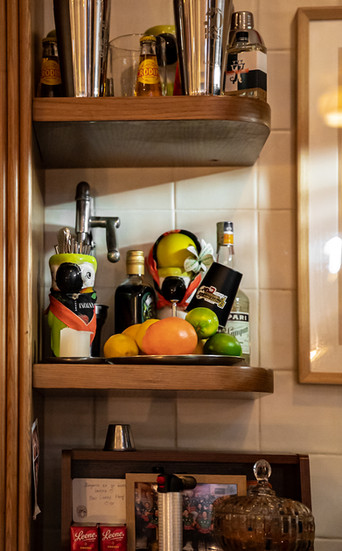
On most evenings, Bar Leone feels like a neighborhood gathering place. Guests chatted on the pavement. Bartenders move comfortably between conversations. Negronis arrive without ceremony. Vintage Italian posters and objects hang on the walls. Familiar faces greet one another across the room. There is little of the theatricality that has increasingly shaped contemporary cocktail culture and almost none of the formality one might expect from the world's most celebrated bar.
Yet that apparent simplicity is precisely the point.
When I sat down and chatted with Lorenzo Antinori, our conversation quickly moved beyond rankings, awards, or industry recognition. Instead, we found ourselves discussing something far more fundamental: why people continue to gather around bars in the first place.
Over the past decade, cocktail culture has undergone a remarkable transformation. Menus became increasingly elaborate. Techniques borrowed from professional kitchens expanded the creative possibilities of the modern bar. Bartenders embraced fermentation, clarification, distillation, and increasingly sophisticated forms of experimentation.
The results were often extraordinary. Yet somewhere within that evolution, Antinori found himself returning to the basics. "We wanted to move away from all the bells and whistles," he tells me. "Sometimes you try to add too much, and in the process you lose the essence of what you're actually trying to achieve."
"Sometimes you try to add too much, and in the process you lose the essence of what you're actually trying to achieve."
The observation would eventually become the foundation of Bar Leone. Rather than beginning with trends, Antinori and his business partner returned to the experiences they personally loved most. The answer had very little to do with complexity.
"The drinks were important," he explains, "but what mattered most was the atmosphere, the simplicity of the menu, being able to understand the offering, and having a good conversation with the waiter or bartender."
At a time when much of the industry was pursuing innovation through greater complexity, Bar Leone found success through clarity. The concept feels deceptively simple: excellent cocktails, warm hospitality, an atmosphere built around conversation, and a space where people feel comfortable enough to return again and again.
Yet perhaps that simplicity explains why Bar Leone has resonated so strongly with both industry professionals and everyday guests. Its success reflects something larger than cocktail culture alone. It reflects a growing desire for experiences shaped by human connection.

Building Bar Leone
Long before Bar Leone became one of the most recognized bars in the world, it began with memories of Rome.
Raised in the Italian capital, Antinori grew up surrounded by neighborhood bars that formed part of daily life. These were not destinations people travelled across cities to visit. They were extensions of the community itself: places where coffee, aperitivo, football, conversation, and family life naturally intersected.
For Antinori, those memories became the emotional foundation of Bar Leone. "Being Italian, I grew up around those kinds of bars," he says. "I felt that an Italian bar was something missing in Hong Kong."
But the idea was never to recreate Rome. Nor was it about nostalgia. Instead, it became an exercise in cultural translation. The aesthetic draws inspiration from fragments of everyday Italian life: football references, familiar imagery, details that would feel instantly recognizable to someone raised in Rome. Individually, these objects appear almost ordinary. Together, they create a powerful sense of authenticity. Yet the physical design represents only part of the story. The real challenge involved translating the atmosphere itself.
"In Italy, hospitality is very important," Antinori explains. "Our way of expressing warmth is different. Not better. Just different."
The influences behind Bar Leone remain deeply rooted in Italy. When asked which bars continue to inspire him, Antinori immediately references institutions that have shaped generations of hospitality professionals: Bar San Calisto in Rome, Camparino in Galleria and Bar Basso in Milan, and the legendary Harry's Bar in Venice. Despite their differences, each embodies qualities that resonate throughout his own work: longevity, character, familiarity, and a deep connection to place.
During the early years of Bar Leone, much of his energy focused on transmitting that spirit to the team. The goal was never to create a rigid service style. Instead, it was about encouraging personality, familiarity, humor, and genuine interaction.
Guests were welcomed as individuals rather than transactions, creating the sense of familiarity and ease that defines great neighborhood bars everywhere. At the same time, Antinori remains careful not to romanticise the concept.
"We always say we're not a Roman bar," he tells me. "We're a Roman-inspired bar, but still a Hong Kong bar." That distinction reveals one of Bar Leone's greatest strengths. Rather than importing Rome wholesale, the venue found common ground between two cities that, on the surface, appear very different.
"We always say we're not a Roman bar. We're a Roman-inspired bar, but still a Hong Kong bar."
Rome is a city of neighborhoods, and Antinori discovered that Hong Kong shares much of that same character. When discussing his hometown, Antinori speaks not simply of Rome but of Testaccio, the district where he grew up. For many Romans, neighborhood identity remains central to how they understand the city.
What surprised him was discovering a similar dynamic in Hong Kong. Sheung Wan possesses its own rhythm, character, and sense of belonging. Relationships form between neighbors, local businesses, and regular customers. Despite the city's density and pace, there remains a strong sense of micro-community.
"It almost feels like a small village," he says. That observation became another foundation of Bar Leone. The bar's success was never about transporting guests to Rome. It was about creating a place where people could feel at home.

Hospitality Before Mixology
If Bar Leone was built upon the idea of simplicity, its philosophy ultimately rests on something even more fundamental: Hospitality.
Throughout our conversation, Antinori repeatedly redirected attention away from cocktails and back toward people. While Bar Leone is celebrated for its drinks, he rarely speaks about cocktails as the defining element of the experience. Instead, he returns again and again to atmosphere, relationships, and the emotional dimension of hospitality.
"I think we're slowly going back toward a more human-centric bar experience," he says. Part of that shift, he believes, reflects the realities of modern life. "Going out is expensive. Life is expensive." As consumers become more selective about where they spend both their time and money, hospitality can no longer rely solely on novelty or spectacle. People want experiences that feel approachable, welcoming, and worth returning to. In Antinori's view, the industry's renewed emphasis on connection is not simply a stylistic trend. It is a response to changing expectations and a reminder that great hospitality begins with making people feel comfortable.
"I think we're slowly going back toward a more human-centric bar experience, where cocktails are not necessarily the sole protagonist."
The observation feels particularly relevant today. Over the past decade, many bars have become increasingly sophisticated in their execution. Technical innovation has expanded what is possible behind the bar, while social media has encouraged a culture of visual storytelling and constant reinvention. Yet as guests become more experienced and more discerning, many appear to be seeking something less performative and more personal.
For Antinori, cocktails remain important, but they ultimately support a much larger objective: creating meaningful experiences between people. His philosophy extends to the drinks themselves. While modern cocktail culture often celebrates novelty, Antinori remains fascinated by the enduring power of the classics. The reason, he argues, is surprisingly practical.
"To create a timeless cocktail, you still have to rely on existing structures. What makes a drink timeless is replicability."
"What makes a drink timeless is replicability." Whether discussing a Negroni, a Whisky Sour, or more recent creations such as the Penicillin, he believes the cocktails that endure are those that can be recreated consistently across cities, generations, and cultures. Great drinks may evolve, but they remain rooted in structures that people understand, and bartenders everywhere can execute. For Antinori, innovation rarely means abandoning tradition. More often, it means building thoughtfully upon foundations that have already stood the test of time.
"Service is more about the function," he explains. "Serving a drink, opening a door, bringing food to the table. Hospitality is the larger idea that sits above all of that." The distinction becomes especially clear when discussing the difference between service and hospitality. Service can be taught through procedures and standards. Hospitality requires something more instinctive. It demands empathy, generosity, awareness, and the ability to make another person feel comfortable within a space.
"Every night, you give a piece of yourself to somebody else."
For Antinori, hospitality remains one of the most deeply human professions. "Every night, you give a piece of yourself to somebody else." It is perhaps the most revealing sentence of our entire conversation.
Behind every cocktail, every interaction, and every successful evening lies an act of emotional generosity. The role of hospitality extends beyond serving drinks or managing reservations. It involves creating an environment where people feel welcomed, understood, and at ease. That belief also helps explain why Bar Leone has resonated with such a broad audience.
The most memorable hospitality experiences often have little to do with what was consumed and everything to do with how people felt. Antinori understands this intuitively. Many guests return to a bar because of a particular bartender. Others return because they enjoy a familiar conversation, a sense of recognition, or simply the comfort of knowing they belong. The drink may provide the initial reason to visit, but relationships are often what create loyalty.
"People come back because they connect with different team members in different ways," he says. That human dimension remains difficult to replicate and impossible to automate, perhaps one reason Antinori believes the industry is gradually rediscovering some of its oldest truths. As hospitality continues to evolve, the venues that leave the deepest impression may not necessarily be the most complex or technologically advanced. They are often the places where guests feel genuinely welcomed. For Lorenzo Antinori, that distinction makes all the difference.

The Art of Making People Feel Welcome
If hospitality sits at the heart of Antinori's philosophy, leadership becomes the mechanism through which that philosophy is sustained. Building a successful bar is one challenge; building a team capable of delivering the same warmth, energy, and consistency every evening is another entirely.
As Bar Leone evolved from a neighborhood concept into one of the world's most recognized hospitality brands, Antinori found himself thinking increasingly about culture. Not company culture in the corporate sense, but the human culture that exists behind every successful operation.
"Listening is the most important tool we have."
How do you preserve authenticity as a team grows? How do you maintain personality without sacrificing standards? How do you create consistency without turning hospitality into a script?
For Antinori, the answer begins with listening. The statement surfaces repeatedly throughout our conversation. Whether discussing leadership, training, or professional development, he returns to the same principle. Leadership is not simply about directing people. It is about understanding them.
It means having open conversations about ambitions, concerns, uncertainties, and growth opportunities. It means understanding what motivates individuals and creating an environment where they feel supported as professionals and as people.
"We have manuals and systems on paper," he says. "But ultimately it comes down to drawing a path for each person."
That perspective feels deeply relevant within hospitality, an industry often characterised by intensity, long hours, and constant pressure. Technical training remains essential, yet Antinori believes the strongest teams are built upon qualities that extend far beyond operational excellence.
When asked which values matter most, Antinori points to professionalism, respect, curiosity, responsibility, honesty, and trust. Noticeably absent are words such as creativity, innovation, or ambition, qualities often celebrated within hospitality. For Antinori, character comes first.
"You can teach someone professionalism. You can teach someone how to make cocktails. But you cannot teach someone how to be an honest human being."
"Technical skills don't matter if there is no trust, honesty, or respect," he explains. That distinction defines much about the culture behind Bar Leone. The goal is not to create identical bartenders or identical personalities. Quite the opposite. While clear standards exist across the business, team members are encouraged to express themselves in their own way. Different personalities create different relationships with guests. Different relationships create different experiences. Antinori sees that diversity as a strength.
Some guests return because they love a particular cocktail. Others return because of a conversation, a shared sense of humor, or the familiarity they find with a specific member of the team.
Hospitality, after all, remains a profoundly human exchange. The most memorable interactions are rarely scripted; they emerge naturally through personality, empathy, and genuine connection. That philosophy has become increasingly important as Antinori's responsibilities continue to grow. Whether inside Bar Leone, Montana, or future projects, his role has gradually shifted from bartender to mentor, from operator to leader.
Yet the objective remains remarkably consistent: to create environments where people feel welcome. Not only the guests who walk through the door, but also the people responsible for opening it every day.
Because for Antinori, great hospitality begins long before the first cocktail is poured. It begins with the people behind the bar.

Growing Without Losing Identity
Success creates opportunities. It also introduces a different set of challenges.
In the years following Bar Leone's extraordinary rise, Lorenzo Antinori's world has expanded well beyond a single neighborhood bar. New concepts, international collaborations, luxury brand partnerships, and projects across multiple cities have transformed what began in Sheung Wan into a growing hospitality platform. Alongside Bar Leone, ventures such as Montana in Hong Kong, Bar Leone Shanghai, collaborations with brands including Louis Vuitton, and activations ranging from St. Moritz to the Academy Awards Governors Ball have introduced new audiences, new markets, and new expectations.
Antinori speaks surprisingly little about growth itself. Instead, he speaks about learning. "Definitely more about learning," he says when asked whether this new chapter feels more about proving something or improving something.
The distinction is revealing. Many hospitality businesses approach expansion as a process of replication. Once a successful formula has been established, the objective becomes repeating it elsewhere. Antinori views the process differently. Every collaboration, opening, activation, and new market becomes an opportunity to better understand the strengths and limitations of the organization itself.
"Every collaboration, every opening, every project teaches us something."
"Even now, there are still many things we realize are important that we didn't fully understand at the beginning," he reflects. That mindset has shaped the way he approaches growth. Rather than asking how to duplicate Bar Leone, he focuses on preserving the values that made it successful in the first place. Those principles must be clearly understood, not only through operational systems and procedures, but through the people responsible for carrying them forward.
"It has to be clear," he explains. "That's the only way future leaders can then share the information with the team and preserve consistency."
Leadership therefore becomes increasingly important as the business evolves. Antinori's role today extends beyond creating hospitality experiences; it involves developing the people who will ultimately shape future chapters of the company. Strong leaders become custodians of culture, translating shared values into everyday practice while preserving the character that defines the business.
The challenge becomes even more nuanced when entering new cities. Every destination possesses its own character, social rhythms, and expectations around hospitality. What resonates in Hong Kong may require a different expression elsewhere. Just as Bar Leone was never intended to be a Roman bar transplanted into Asia, future projects are not conceived as replicas of Hong Kong.
"Service is more about the function. Hospitality is the larger idea that sits above all of that."
Each venue must establish its own relationship with the city around it. The philosophy remains consistent. The expression evolves. That balance between preservation and adaptation may be one of the defining challenges of contemporary hospitality. How do you remain authentic while continuing to grow? How do you protect the intimacy, familiarity, and sense of belonging that first attracted people to a concept?
The projects may become larger. The cities may become more numerous. The opportunities may become more ambitious. Yet the work itself remains fundamentally unchanged: understanding people, building relationships, and creating places where guests feel welcomed.
The scale may change. The principles do not.

Cities, Culture, and Identity
Living and working across Rome, London, Seoul, and Hong Kong has shaped Lorenzo Antinori's perspective as profoundly as any bar he has worked behind. Yet when reflecting on these chapters of his career, he rarely speaks about cocktails, techniques, or industry trends. Instead, he speaks about people.
"More than the cocktails themselves, each place taught me something about how to relate to people," he tells me.
The observation feels particularly relevant in an era where information has become increasingly accessible. Recipes can be shared instantly, techniques can be learned online, and trends now travel across continents within days. What remains far more difficult to acquire is the ability to understand different cultures, social dynamics, and ways of connecting with others.
For Antinori, hospitality is ultimately shaped by those differences. Every city carries its own rhythms, expectations, and social codes. Learning how to navigate them requires far more than technical proficiency; it demands observation, empathy, curiosity, and a willingness to view the world through perspectives beyond one's own.
London provided some of the earliest foundations of his professional development. It was there that he encountered many of the world's leading bars and witnessed hospitality operating at the highest international level. The city exposed him to an environment where excellence, creativity, and competition continuously challenged one another, helping shape his understanding of what great hospitality could become.
Seoul offered an entirely different education. Immersed in a culture rooted in distinct traditions, rituals, and social customs, Antinori discovered new ways of thinking about service, respect, and human interaction. The lessons extended far beyond bartending itself, broadening his understanding of how hospitality is expressed across different societies.
Hong Kong would become another defining chapter. Few cities embody internationalism with the same intensity. East and West intersect daily, cultures overlap, and new ideas emerge with remarkable speed. The city attracts entrepreneurs, creatives, and operators from around the world, creating an environment where ambition and innovation thrive alongside constant reinvention.
"We are in Asia, but Hong Kong is also a truly international city," he says. "It's a melting pot of cultures."
That diversity has played an important role in shaping both Bar Leone and his broader worldview. Throughout its history, Hong Kong has demonstrated an extraordinary ability to adapt, evolve, and continually reinvent itself, a resilience that Antinori deeply admires.
"You can see that resilience in the entrepreneurial spirit here as well." That resilience is one of the qualities Antinori admires most about the city. Throughout its history, Hong Kong has repeatedly adapted to changing circumstances while maintaining a distinct sense of identity.
People come to Hong Kong because they want to build something. That entrepreneurial energy, combined with the city's extraordinary cultural diversity, continues to make it one of the world's most compelling places for hospitality. It is also one of the reasons Antinori believes Hong Kong remains uniquely fertile ground for concepts such as Bar Leone.
Living abroad has also strengthened his relationship with home. Like many Italians who spend significant periods overseas, distance has sharpened rather than diminished his connection to his roots. The further he travelled, the clearer it became which elements of Roman culture remained central to his identity.
"It has made me more honest about it," he reflects. That understanding would ultimately become one of the inspirations behind Bar Leone itself, not as an exercise in nostalgia, but as a way of sharing a culture that continues to shape his outlook on hospitality and life.
When discussing destinations that continue to inspire him, Antinori speaks enthusiastically about Latin America, drawn to its conviviality, food culture, hospitality traditions, and social energy. "I am fascinated by the culture," he says.
What becomes increasingly clear throughout our discussion is that curiosity remains one of his defining characteristics. Despite the accolades, global recognition, and extraordinary success of Bar Leone, he still speaks like someone eager to learn. Perhaps that is the greatest gift of living between cultures. Every city offers a different perspective, every community reveals a different way of understanding the world, and those lessons continue to accumulate along this journey.

Why Bars Still Matter
As our conversation draws to a close, we return to a question that extends far beyond cocktails, hospitality, or even Bar Leone itself: why do bars still matter?
For Lorenzo Antinori, the answer has little to do with drinks and everything to do with what happens around them. In an increasingly digital world, opportunities for genuine human interaction have become both rarer and more valuable. Daily life now occupied by screens, notifications, algorithms, and endless streams of information. We remain constantly connected, yet meaningful moments of connection feel increasingly elusive.
Hospitality creates physical spaces where conversations take place naturally, relationships develop over time, and communities are built through shared experiences. Strangers become familiar faces, regular guests become part of a wider social fabric, and the simple act of gathering takes on a deeper significance.
"Bars are places that connect communities.
They are not just venues."
That belief underpins much of his philosophy. Throughout our conversation, he returns repeatedly to ideas such as belonging, generosity, trust, and familiarity. The recurring theme is never what happens in the glass, but what happens around it.
At their best, bars become social anchors within a city. They offer moments of pause amid busy lives, creating environments where conversations can appear without agenda and where people feel comfortable enough to simply be themselves. Their role may have evolved alongside contemporary drinking culture, yet their fundamental purpose remains consistent.
"Real connections are human connections," he reflects. Perhaps that explains why hospitality continues to endure despite constant changes in technology, consumer behavior, and social trends. Formats evolve, tastes shift, and new concepts emerge, but the reasons people gather remain unchanged. We gather to celebrate, to exchange ideas, to mark important moments, and sometimes simply to enjoy the company of others.
"Real connections are human connections."
That perspective also shapes how Antinori thinks about the future of the profession. His advice to the next generation is straightforward: master the craft, remain curious, and develop a genuine passion for hospitality.
"It doesn't matter what kind of concept you work in," he says. "If you master the craft and become a truly hospitable professional, those are the qualities that will carry you far."
The sentiment feels especially fitting given his own journey. From Rome to London, Seoul, and Hong Kong, Antinori has built a career grounded in understanding cultures, building relationships, and creating places where people feel welcomed. The achievement may have elevated him onto the global stage, but the principles behind it remain grounded and simple.
Bar Leone's success was never solely about cocktails, design, or the growing list of accolades that followed. Its enduring appeal lies in the simple desire to belong.
The world's best bar was never built on complexity. It was built on community. And perhaps that is exactly what people were searching for all along.


Comments