


Vista Ostuni — The Rebirth of a Landmark Beside Puglia's White City
- Andrew C.

- May 31
- 6 min read
Updated: Jun 10

Inside Puglia's Most Anticipated New Luxury Retreat
Set between centuries-old olive groves and the Adriatic coastline, Ostuni has shaped the landscape of Puglia for centuries. Its whitewashed facades, cathedral domes, fortified walls, and labyrinthine alleyways bear the imprint of Messapian origins, Byzantine influence, Norman rule, and generations of southern Italian life. Today, Ostuni remains one of the region's most enduring cultural landmarks.
Few places enjoy a closer relationship with Ostuni than Vista Ostuni.
Positioned directly beside the historic center, the newly opened property commands extraordinary views across the city's iconic skyline while occupying a landmark deeply woven into its history. Created by the Passera family of Lake Como's Lario Hotels, Vista Ostuni marks the group's first venture in southern Italy and introduces a thoughtful new chapter for luxury hospitality in Puglia.









A Building That Refused To Be Forgotten
Long before it became a hotel, the former Manifattura Tabacchi (Tobacco Factory) occupied an important place within the social fabric of Ostuni.
Its origins date back to the fourteenth century as a Dominican convent before evolving through various civic functions over the centuries. During the 19th century, it became a tobacco factory that employed hundreds of local women and played a vital role in the economic life of the city. For generations of Ostuni families, it represented opportunity, independence, and community.
As decades passed, the building eventually fell silent. Its presence, however, remained deeply woven into the collective memory of the city.
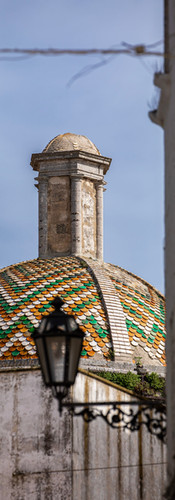
The restoration of the complex became the foundation of Vista Ostuni. Guided by architect Roberto Murgia and a network of local artisans, the project revived original architectural elements through traditional craftsmanship and meticulous restoration. Historic vaults, stone cornices, ironwork, terracotta surfaces, and centuries-old masonry were carefully preserved, creating a dialogue between heritage and contemporary hospitality.
Walking through the property today, one quickly understands that the building remains at the center of the experience. Its history is visible everywhere.





Arrival Beneath The Arches
My first impression of Vista Ostuni was light.
Stepping through the entrance, I found myself standing beneath soaring limestone arches and a monumental central atrium illuminated by oversized skylights. Natural light cascades across restored stone columns and polished marble floors while contemporary furnishings introduce softness and warmth to the grand scale of the architecture.
The atmosphere feels remarkably calm. Guests gather beneath the arches. Conversations drift through the space. Sunlight shifts throughout the day, constantly changing the character of the room. It is an arrival that immediately establishes a sense of place while revealing the ambition behind the restoration.
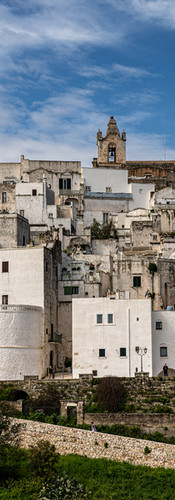
Later, opening the windows of my room, the White City appeared directly before me. Layers of limestone facades, church domes, medieval towers, and centuries-old homes rose across the landscape, their colors subtly changing with the movement of light throughout the day.
Throughout the stay, the landscape presents itself differently with each passing hour. Yet the first sight of Ostuni rising beyond the window remains among the property's most memorable moments.





Design Rooted In Place
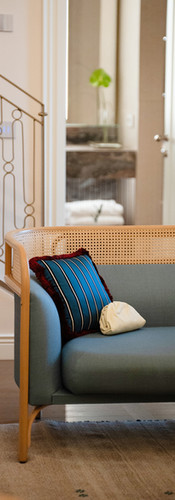
Throughout Vista Ostuni, architecture and interiors remain in constant dialogue with the building's history and the surrounding landscape. Local stone, bespoke furnishings, handcrafted ceramics, natural textiles, and contemporary Italian design create spaces that balance refinement with warmth. Historic vaults sit comfortably alongside contemporary artworks, while rich marble surfaces and carefully considered lighting bring softness to the monumental scale of the former tobacco factory.
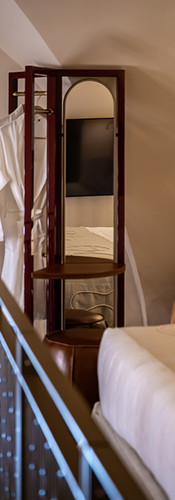
This approach continues throughout the hotel's 28 rooms and suites. Vaulted ceilings, warm timber finishes, artisanal details, and a restrained palette inspired by limestone, olive groves, and the Adriatic establish a distinctly residential character. Large windows frame views of the White City, gardens, countryside, or distant coastline, ensuring the landscape remains present throughout the stay. The accommodations carry the same sense of calm and permanence found throughout the property, reflecting a thoughtful interpretation of contemporary Puglian living.








At The Edge Of The White City
Vista Ostuni's greatest luxury may be its relationship with the destination itself.
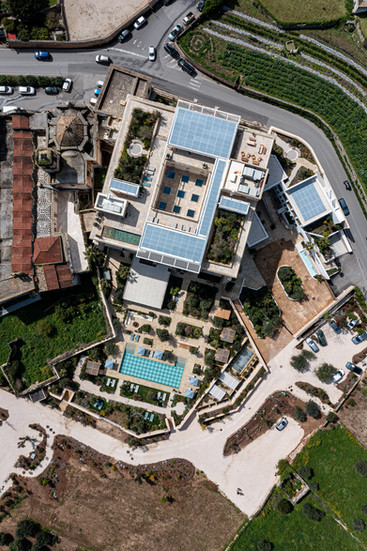
The property occupies one of the most privileged positions in Puglia, placing guests within walking distance of Ostuni's historic center while offering the space, privacy, and amenities of a contemporary resort.
Mornings can begin wandering through medieval alleyways and artisan workshops before giving way to time beside the pool, within the spa, or across the hotel's expansive terraces. This proximity creates a rhythm that feels uniquely suited to Ostuni. The experience moves effortlessly between cultural discovery, restorative downtime, and a deeper connection to the surrounding landscape.
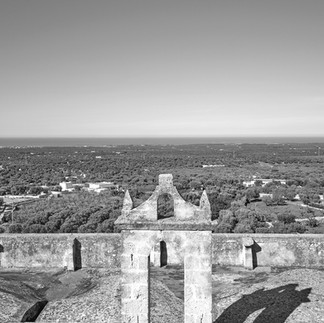
The perspective becomes even more remarkable from the rooftop. To one side rises the White City in extraordinary detail, its cathedral, domes, and limestone facades appearing close enough to touch. Beyond the city, endless olive groves stretch across the valley before giving way to the Adriatic Sea on the horizon.
Standing here at sunset, watching the city slowly glow beneath the fading light, becomes one of the defining moments of a stay at Vista Ostuni.



A Culinary Journey Through Vista Ostuni
The culinary experience at Vista Ostuni extends naturally from the philosophy that shapes the rest of the property: a deep connection to place, craftsmanship, and the rhythms of southern Italy.
At Bianca Bistrot, bright interiors framed by botanical textiles, handcrafted details, woven lighting, and expansive windows create a contemporary interpretation of Mediterranean dining. Overlooking the gardens and pool, the restaurant captures the relaxed pace of Puglian life while celebrating ingredients sourced from nearby farms, fishermen, and producers. The menu reflects the region's agricultural richness through seasonal dishes that balance simplicity, freshness, and refinement.





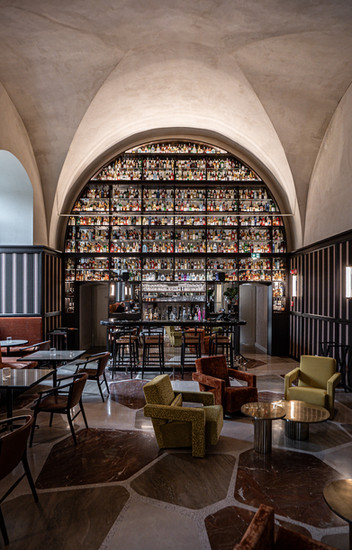
As day transitions into evening, Chiostro Bar becomes one of the property's most compelling gathering spaces. Set beneath soaring vaulted ceilings within the restored historic structure, the bar combines architectural grandeur with an atmosphere of intimacy and ease. A remarkable floor-to-ceiling collection of spirits rises beneath centuries-old arches, while guests gather for cocktails and aperitivo within a setting that feels deeply connected to the building's past.
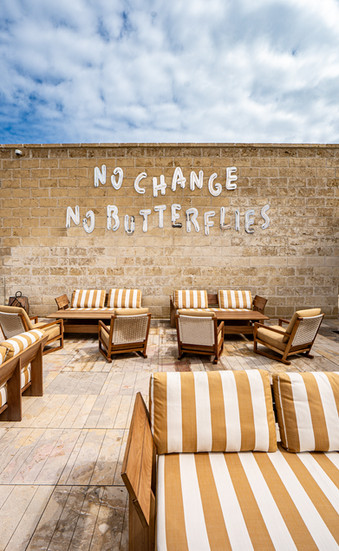
Evenings naturally gravitate toward the Rooftop Bar, where guests gather for aperitivo as the light shifts across the city skyline and conversations linger long after sunset. The atmosphere feels distinctly Italian: relaxed, social, and deeply connected to its surroundings. With Ostuni illuminated in the distance and the landscape gradually fading into dusk, the rooftop becomes one of the property's most memorable gathering places.
Together, these venues create a culinary program shaped as much by architecture and landscape as by gastronomy, offering a contemporary expression of Puglia that reflects the region's character.





Three Pools, Three Perspectives
Wellness at Vista Ostuni is expressed through three distinct environments.
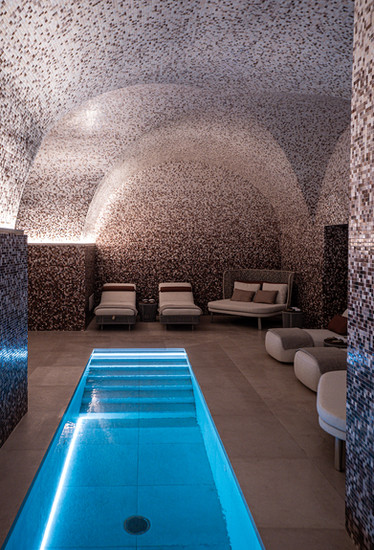
The garden pool sits within landscaped grounds designed by Erik Dhont Landscape Architects, surrounded by olive trees and native vegetation, with quiet corners for relaxation. Below the historic structure, the spa transforms ancient vaults into an atmospheric sanctuary of mosaic-lined walls, soft lighting, and restorative treatments.
Above it all, the rooftop infinity pool offers one of the most extraordinary settings in the region. Floating between the White City, endless olive groves, and the Adriatic Sea, it captures the full geography of Puglia within a single panoramic view.
Each space offers a different perspective on the destination. Together, they define the rhythm of life at Vista Ostuni.






A New Chapter For Ostuni
Vista Ostuni arrives at an important moment for Puglia.
Its greatest achievement lies in how naturally it belongs to Ostuni itself. The restoration of the former tobacco factory has preserved a significant piece of the city's heritage while creating an elevated contemporary destination shaped by architecture, craftsmanship, and a profound sense of place.
For those drawn to design, history, and fresh perspectives, Vista Ostuni stands among the most significant openings in Italy this year. More importantly, it reflects the continued evolution of Puglia itself, a region whose cultural richness, architectural heritage, and growing hospitality ambitions continue to define one of southern Europe's most dynamic travel landscapes.


Comments