


Markos Chaidemenos of Canaves Collection on Evolving a Santorini Legacy

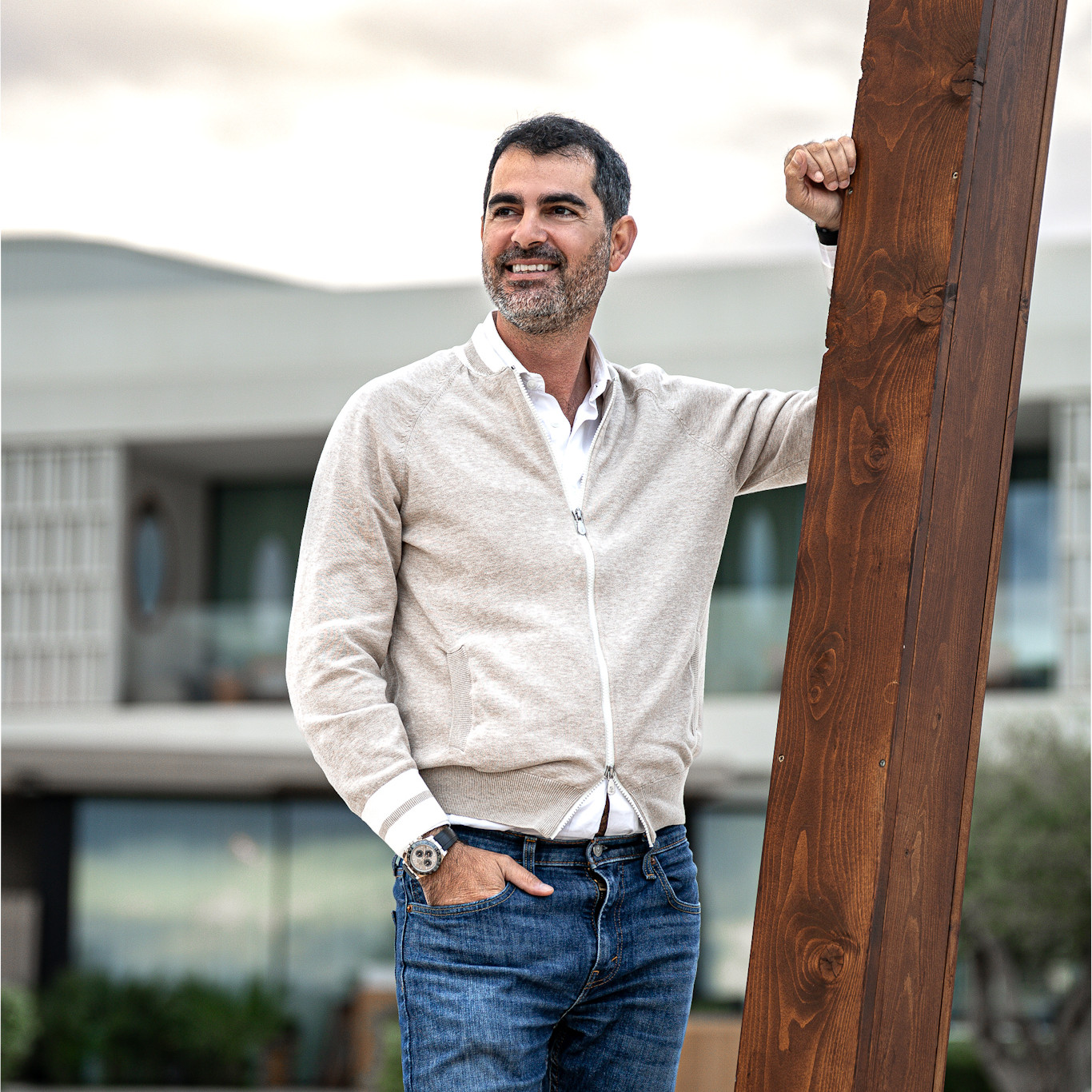
Some conversations take years to arrive at the right moment.
My history with Markos Chaidemenos and Canaves Collection goes back almost to the beginning of My Inspire Project. We met through one of our closest mutual friends, and during our first year, Santorini became one of the places that helped shape what our platform would become. Our first travel film was made here, at Canaves Oia.
Much has changed since.
My Inspire Project has grown far beyond those early journeys. Canaves has grown from its beginnings in Oia into Canaves Collection, one of Greece’s most recognized independent hospitality names. Santorini itself has undergone a transformation few destinations have experienced with such intensity.
For Markos, that transformation is also family history.
His parents, Yiannis and Anna Chaidemenos, were among the early hoteliers in Oia, beginning with two converted wine caves when tourism was still taking shape. Yiannis also served as mayor of Oia, helping guide a village opening itself to international tourism while protecting the architecture and identity that made it distinctive.
Markos grew up inside that evolution. In 2010, he and his brother Alexandros assumed leadership of Canaves, bringing a more international outlook to a business still closely tied to the family and island from which it came.
His generation now faces a different version of the question his father confronted decades earlier.
Santorini’s extraordinary success has brought opportunity alongside pressure on its infrastructure, housing, resources and communities. For a family whose history is intertwined with Oia’s rise, the responsibility of what comes next is particularly personal. The challenge is no longer about how to grow, but how to preserve what made that growth possible.
That question has become even more relevant as Canaves enters its next chapter, with ambitions that now extend beyond Santorini.
Markos and I have watched our respective worlds grow and shared plenty of memories along the way. Sitting down for this conversation felt like the right moment to look back at how we got here—and, more importantly, where he wants to go next.
The iconic view of Oia Santorini Canaves Oia Canaves Epitome


Inheriting Oia
Markos Chaidemenos remembers an Oia very different from the one most travelers know today.
This was the Oia of his childhood, before the sunset crowds and international recognition transformed the village into one of the Mediterranean’s most desired destinations. Canaves was growing alongside it, although the family story reaches further back than hospitality.
Markos’s great-grandfather was a winemaker, using the caves carved into Oia’s volcanic cliffs for fermentation and storage. Known locally as canaves, these traditional wine cellars would eventually give the business its name. In 1986, his parents, Yiannis and Anna Chaidemenos, began converting two of the family caves into guest accommodation. This year, Canaves Collection celebrates its 40th anniversary.
The family photographs make those beginnings tangible. Chickens wander between rough stone walls and cave openings; wooden barrels fill the old cellars. Later, those same spaces appear whitewashed and inhabited, with simple wooden furniture and terraces looking across a caldera almost startlingly empty by today’s measure. Markos is there too, growing up inside the hotel taking shape around him.
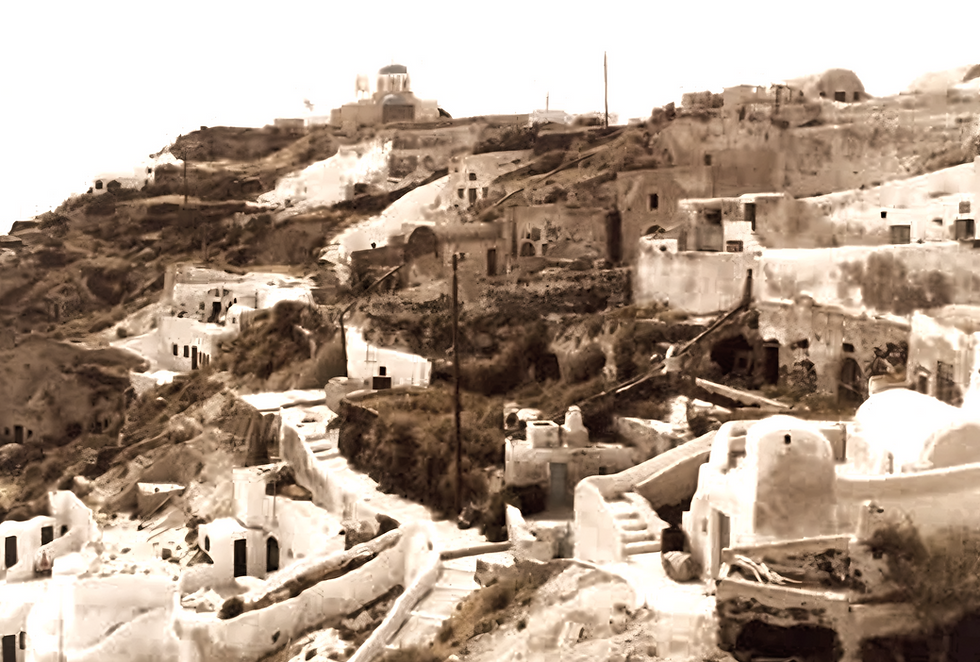
The original site of Canaves before turning it into a resort. (Courtesy of Canaves Collection) The Canaves Oia today Old image of Oia main road (Courtesy of Canaves Collection) The original canaves (Courtesy of Canaves Collection) The original canaves (Courtesy of Canaves Collection) The original canaves (Courtesy of Canaves Collection) The original canaves (Courtesy of Canaves Collection)
His earliest memory of Canaves is of the large brown reception desk where his mother did the accounting. The family lived behind the reception area of what is now Canaves Ena, and at three or four years old, Markos would crawl beneath the desk and hide things in its small compartments.
“That was your playground,” I tell him during our conversation. It quite literally was.
Hospitality never arrived as a grand decision. At 18, Markos says, studying hospitality simply felt “like a given.” He moved to Switzerland for hospitality management before returning to the business he had grown up around. He is candid about the advantage of that inheritance: his parents had already built a business and given him a path into the industry. What he considers himself even luckier to have discovered is that he genuinely loves the work.
“I really love what I’m doing. It’s my hobby, it’s my passion,” he says.
When Markos took over in 2010, however, loving Canaves did not mean preserving it exactly as he found it.
“I had a very different mindset,” he remembers. The first thing he wanted to change was “the philosophy”, the way the family thought about the business and how it operated. The properties were authentic to Oia, but Markos felt their traditional style no longer spoke to the travelers he wanted to reach. He pushed for a more contemporary expression of the cave architecture and a more outward-looking approach to the business.
The harder transformation was within the family. “The family was doing things in a certain way,” he says. “It was difficult to change the mindset.”
There was, he admits, “a lot of fighting in the beginning.” At one point, the resistance became serious enough for Markos to question whether he belonged in the business at all. If his family believed his ideas would not work, he remembers thinking, perhaps he should do something else.
“It was a family business. The family was doing things in a certain way, but the first thing we needed to change was the philosophy.”
Markos had been given the opportunity to enter Canaves; the authority to change it still had to be earned.
Eventually, his family allowed him to try. The properties changed, guests responded, and new markets followed, particularly from the United States. What had initially created friction began producing results.
“After that, there was trust.”
Forty years after those first caves opened to guests, the simplicity of that line carries particular weight. Markos did not need to discard what his parents had built to establish his own direction. He learned where their experience mattered, where Canaves needed to evolve and, through the process, earned the freedom to take it somewhere new.
Today, the old reception where he once hid beneath his mother’s desk is Suite 16. The child who grew up inside Canaves is now deciding how far beyond Oia its name can travel.
The early edition of Canaves Oia (Courtesy of Canaves Collection) Young Markos at his family property. (Courtesy of Canaves Collectio The early edition of Canaves Oia (Courtesy of Canaves Collection) The early edition of Canaves Oia (Courtesy of Canaves Collection) The early edition of Canaves Oia (Courtesy of Canaves Collection) The early edition of Canaves Oia (Courtesy of Canaves Collection) The early edition of Canaves Oia (Courtesy of Canaves Collection)
The Freedom to Evolve
The changes inside the hotels were only the beginning.
Early on, he began travelling to meet the people sending guests to Canaves: travel advisors, tour operators and partners, sometimes even visiting guests in their own countries. It was a distinctly personal approach to sales and marketing, and one Markos credits with building trust, attracting more repeat guests and opening Canaves to new markets.
“This helped us build confidence with our friends and partners,” he tells me. “And this made a big difference.”
Markos remains closely involved in the conception and construction of the hotels. What works on paper does not always work in reality, and he readily recalls moments when something was completed only for the family to decide it had to be done again.
“Let’s change it, demolish it and let’s do it again. It’s not the most cost-effective way of building,” he admits. Return on investment matters—“of course, this is important to sustain a business”—but, for Markos, “it’s a way of life.”
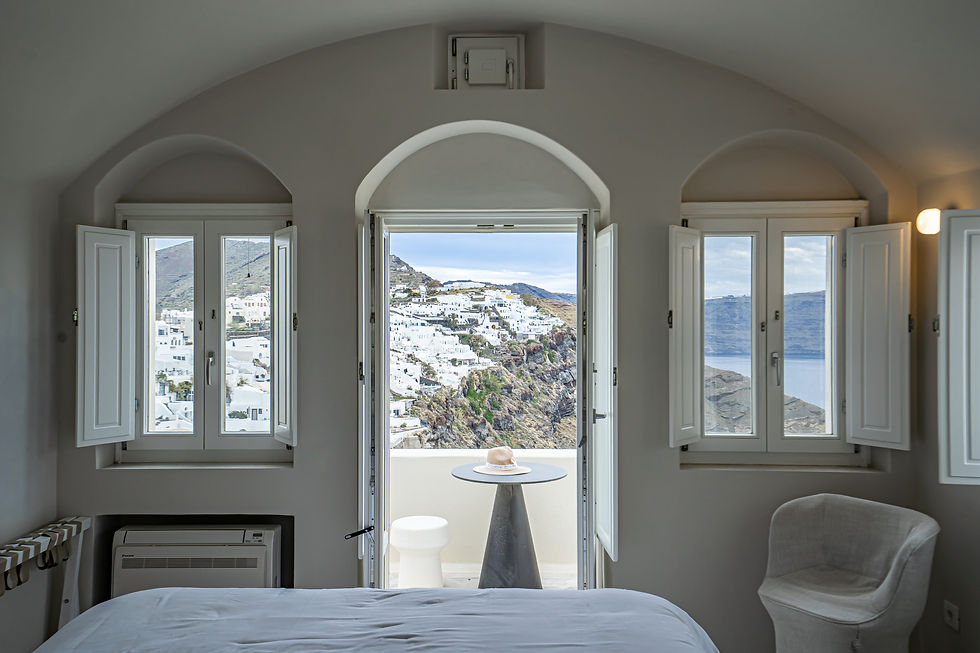
Inside Canaves Oia Inside Canaves Oia Inside Canaves Oia Inside Canaves Oia Inside Canaves Oia Inside the new family villa at Canaves Oia Inside the new family villa at Canaves Oia Inside the new family villa at Canaves Oia Inside the new family villa at Canaves Oia Dining experience at Petra Restaurant at Canaves Oia Dining experience at Petra Restaurant at Canaves Oia
He describes the process as one of “a lot of errors, a lot of mistakes that we learn from,” and that same willingness to reconsider extends to growth itself. Markos has turned down properties and projects that did not feel right for Canaves.
“We are who we are because of all the noes and all the rejections.”
That philosophy now guides Canaves as it enters its most ambitious period of growth.
Two years ago, Canaves Oia became Canaves Collection, a rebranding that signaled something larger than a change of name. Oia remains its origin and Santorini, Markos says, will “always have a special part in our hearts.” But once the family began looking beyond the island, a brand defined geographically by Oia could no longer describe where they wanted to go.
For Markos, it was never about reproducing Santorini elsewhere. The whitewashed caves belong to Oia. What Canaves could carry forward was its way of seeing a place, its taste, hospitality and understanding of a destination, while allowing somewhere new to inspire a different expression.
Naxos will be the first test.
Canaves is developing a beachfront property of around 35 suites there, with an opening currently planned for 2027. Markos was drawn to an island with a life of its own beyond tourism: beaches alongside mountain villages, agriculture and livestock, and communities whose identities are not entirely dependent on visitors. In fifteen minutes, as he describes it, you can leave the beach and find yourself in a mountain village experiencing another side of Greek island life.
His vision for the hotel begins with how Naxos makes him feel. He imagines arriving, taking off your shoes and moving barefoot through a small village beside the beach, with little reason to put them back on until departure.
“That’s what the island makes me feel,” he says. “We want to show the destination through our style, our taste, our understanding.”
It is a deceptively simple description of what Canaves is attempting after four decades in Santorini. The next chapter is not about exporting Oia. It is about taking the instincts developed there somewhere new, while allowing another island to retain its own character.
Inside Canaves Ena, the first Canaves property (Courtesy of Canaves Collection) Inside Canaves Ena, the first Canaves property (Courtesy of Canaves Collection) Inside Canaves Ena, the first Canaves property (Courtesy of Canaves Collection) Inside Canaves Ena, the first Canaves property (Courtesy of Canaves Collection) Inside Canaves Ena, the first Canaves property (Courtesy of Canaves Collection) Inside Canaves Ena, the first Canaves property (Courtesy of Canaves Collection) Inside Canaves Ena, the first Canaves property (Courtesy of Canaves Collection) Inside Canaves Ena, the first Canaves property (Courtesy of Canaves Collection) Inside Canaves Ena, the first Canaves property (Courtesy of Canaves Collection)

The People Who Carry Canaves
Seasonality places a particular pressure on hospitality. In destinations like Santorini, where hotels operate through an intense part of the year, and much of the workforce arrives from elsewhere, keeping a strong team from one season to the next is a persistent challenge. For Markos, that stability has become one of the most valuable parts of the Canaves experience.
At this level of hospitality, Markos considers the view, location and quality of the physical product almost givens. What distinguishes one experience from another is the emotional connection between a guest and the people they encounter along the way.
“The way you interact with us is the way you interact with a destination.”
Want to read more?
Subscribe to myinspireproject.com to keep reading this exclusive post.


