


Eittem — The New Shape of Desire

Updated: Aug 26
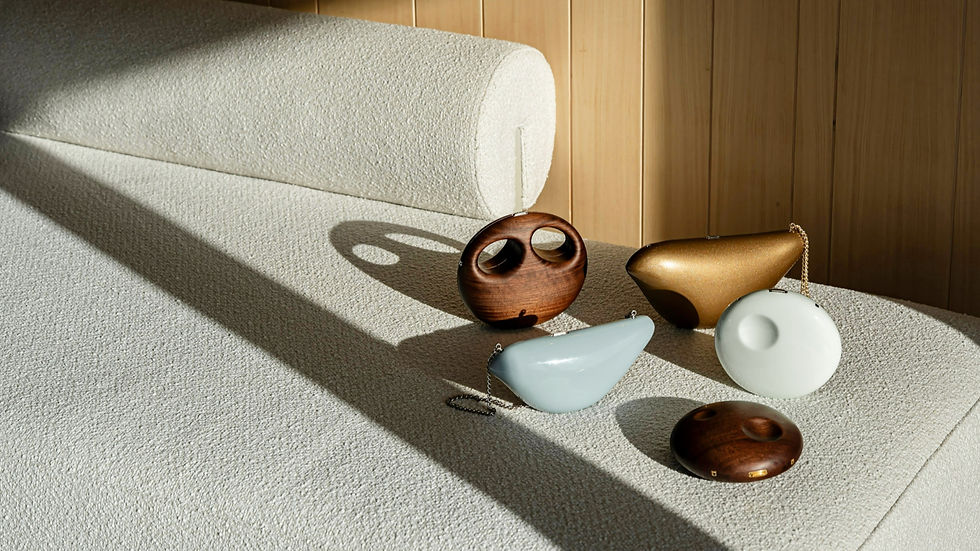
After living and traveling with Eittem’s sculptural handbags, Andrew Chen reflects on the craftsmanship, individuality, and distinctive design language of a young New York house worth knowing, and pieces worth keeping.
The Object That Stopped Me
Before travel and hospitality became the center of my work, I spent more than a decade in luxury fashion, with handbags occupying an important place in that world. I worked with leading designers, artisans, and suppliers across Europe, particularly in Tuscany, Italy, as well as Japan and the United States, following the life of a product from the design studio and workshop through production, distribution, and some of the world’s most discerning retailers.
Those years shaped the way I look at a handbag. Beyond design, I pay attention to proportion and construction, the meeting of materials, the precision of hardware, the balance in the hand and the finishing of details most people may never consciously examine.
That is why Eittem caught my attention.
The first encounter is closer to discovering an object in a gallery. Its rounded, sculptural forms have an immediate clarity. Branding is discreet; proportion, material and silhouette carry the identity. There is assurance in an object capable of communicating so much through form alone.
Then you hold one.
For an object sculpted from solid wood, its lightness is unexpected. The walnut is extraordinarily smooth; the hardware meets the body with remarkable precision; the interior follows its curved architecture beautifully. These are details I instinctively notice, and closer examination only strengthened my impression of the workmanship.
Another quality drew me to Eittem: the collection has been given time.
Its beginnings reach back years before the brand formally entered the market, through experimentation, engineering and refinement. That long gestation can be felt in the finished pieces: the collection arrives with an unusual degree of confidence for a young house.
For someone who has spent years around exceptional handbags, it was this meeting of originality and execution that made me want to look further.
And the closer I looked, the more interesting Eittem became.
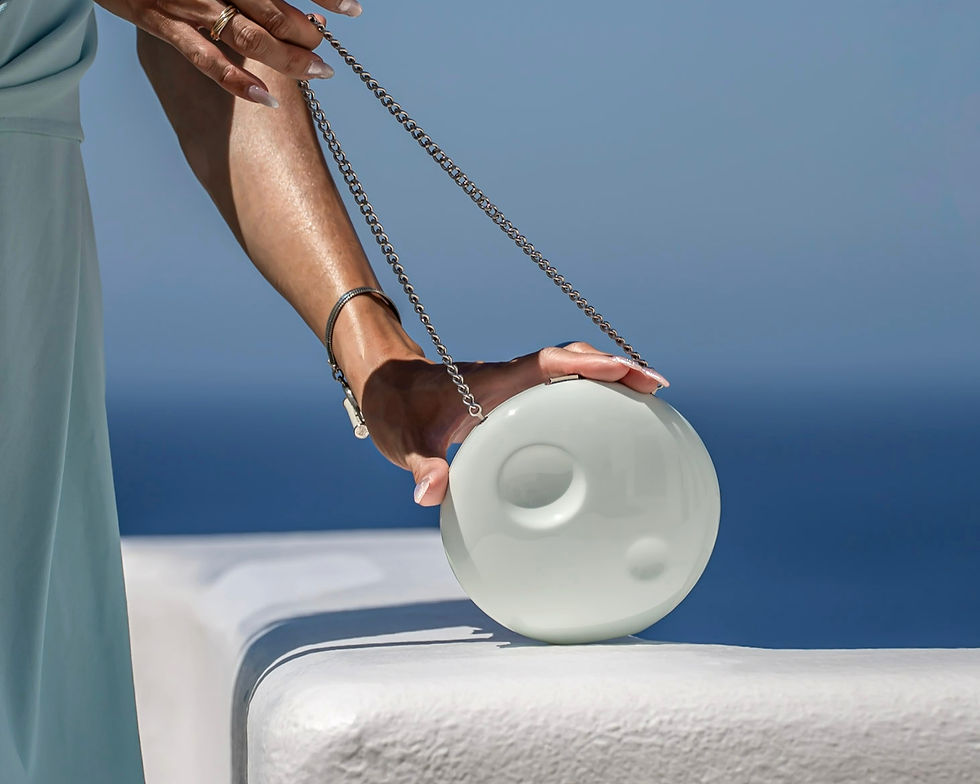
Petite Bird in Aurum on model (Courtesy of Eittem) Petite Bird in Aurum on model (Courtesy of Eittem) Petite Moon in Aurora (Courtesy of Eittem)

A Gesture of Love, A Design Language
Eittem began with a gift.
More than a decade before the brand formally entered the market, Erin Saluti sketched a handbag she wanted for herself. Her husband, Joe, had recently acquired a woodworking machine capable of carving curved forms and wanted to make something for her birthday. Together, they translated her drawing into walnut.
Erin began carrying it.
The object attracted attention. Strangers stopped her to ask what it was and where it came from. The response stayed with her, while the original remained part of her own wardrobe for years before becoming the point of departure for a larger body of work.
What followed was an extended period of drawing, prototyping and engineering, including six years of focused research and development before Eittem formally launched in New York in 2024. By then, the proposition had moved well beyond the novelty of making a handbag from wood. A material experiment had developed into a coherent language of form.
Erin’s background in contemporary art, design and interiors is legible in that language. She considers the handbag spatially: through volume, curvature, proportion and negative space, with equal attention to how an object occupies a room and how it relates to the body.
From this vocabulary came Owl, Moon and Bird—three forms drawn from nature and distilled through geometry. In Owl, circular apertures suggest eyes while functioning as handles. Bird is defined through the sweep of its profile. Moon finds its character in the purity of its curved silhouette.
Together, they have the cadence of a small exhibition. Each stands independently, while a disciplined relationship between line, proportion and material makes their shared authorship immediately recognizable.
Branding remains discreet, integrated into the hardware rather than placed prominently across the surface. Recognition is entrusted to the object itself. For an emerging name, that is an ambitious proposition: a signature form acquires meaning through the strength of its design and the consistency with which its vocabulary develops.
The clearest evidence of that strength came before the brand itself existed. Erin carried the original piece for years; the curiosity surrounding it arose naturally through encounters between the object, its wearer, and those who noticed it. Long before Eittem had a commercial identity, the form was already commanding attention.
That instinct remains intact: create an object distinctive enough to invite a second look, and sufficiently resolved to reward it.
The love object became a collection. The collection is now becoming a signature.

Sculpting a Handbag
The sculptural clarity of an Eittem depends on an unusually complex way of making one.
At its Manhattan atelier in the Starrett-Lehigh Building, the process begins with salvaged American walnut, sourced primarily from trees in New York State. Each piece carries its own grain and natural variation, making it part of the bag's character.
From there, technology and handwork enter into a carefully calibrated relationship.
Eittem spent six years developing a proprietary production process in which digital tools establish the precision required to achieve its complex curves and dimensions. Much of the making that follows remains in the hands of the atelier team, whose members are trained in art and design and maintain creative practices of their own. Once the base form has been precision-carved, extensive sanding and finishing are carried out by hand, transforming a material more readily associated with furniture and architecture into something tactile and light.
Inside, Alpine calf leather is hand-wet-molded to follow the shell's curvature. Rather than functioning simply as a lining, it becomes part of the internal architecture. The pocket is saddle-stitched by hand and tucked beneath the wood, preserving the continuity of the form from exterior to interior.
The hardware demands comparable precision. Seventeen individually engineered stainless-steel components are polished to a jewelry-like finish and inlaid into the body, while the sterling-silver chain is rhodium plated. Newer expressions extend that material vocabulary into solid brass and gold-finished elements. This is where years spent examining handbags become useful. Fine craftsmanship often reveals itself at the junctions: where one material ends, and another begins, how precisely hardware has been seated, and whether the interior has been resolved with the same discipline as the exterior.
With Eittem, the transitions between wood, metal, and leather are exceptionally well executed, with minimal interruption between materials. Surfaces remain smooth, and the curved geometry continues inside the shell. That attention extends to the way the bag meets the body. Curvature, openings and points of contact are engineered around the hand, while each piece can stand independently when set down: an accessory designed to be carried and an object capable of holding its own in space.
Longevity has been considered with similar rigor. Eittem produces locally in limited quantities, using water-based, solvent-free finishes and construction methods designed to minimize adhesives. The solid-wood body can be refinished, the leather interior replaced and the hardware adjusted, with the atelier providing lifetime care for normal wear.
What impresses me most is the resolution between disciplines. Woodworking, leathercraft, jewelry finishing and digital engineering operate at very different tolerances, yet here they meet within a remarkably compact object. The technical complexity is considerable; the finished piece communicates almost none of the effort required to achieve it.
You see the form first. You discover the making through touch.
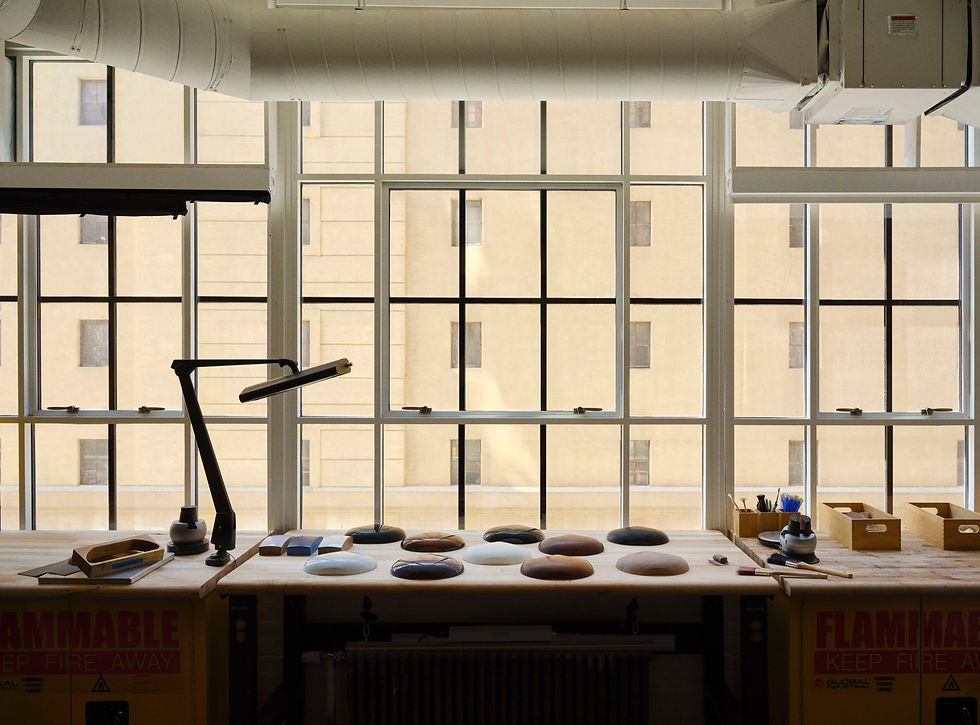
The making of Eittem, inside brand's atelier in the Starrett-Lehigh Building in Manhattan, New York The making of Eittem, inside brand's atelier in the Starrett-Lehigh Building in Manhattan, New York The making of Eittem, inside brand's atelier in the Starrett-Lehigh Building in Manhattan, New York

When Shape Becomes Identity
For a young design house, creating a memorable form is only the beginning. The more revealing question is how far that form can evolve while remaining unmistakably its own.
With Owl, Moon and Bird providing Eittem with a concise foundation, the house is developing them through scale, color, material and finish, allowing their character to shift while preserving the geometry that makes each recognizable.
The Petites offer the clearest expression of that evolution.
Reduced in scale, the familiar silhouettes acquire a different energy. Their proportions become more concentrated and jewel-like, bringing them closer to adornment while preserving the architecture of the originals. Curves tighten, the relationship with the body changes, yet their identity remains intact.
Here, miniaturization becomes an exercise in proportion rather than novelty. It tests whether a design can withstand reinterpretation, and reveals how little information is needed for its identity to remain intact.
Material and finish introduce another register. Color can sharpen or soften the geometry; contrasting interiors and different metals shift its character without disturbing the identity beneath it.
This is how a collection begins to acquire the vocabulary of a house: through an idea sufficiently defined to remain legible, yet flexible enough to sustain reinterpretation. Fashion is accustomed to the constant arrival of the new. Here, progression comes through returning to an established idea and discovering how much further it can go.
You recognize the shape before you need to know its name.
You recognize the shape before you need to know Eittem's name. You recognize the shape before you need to know Eittem's name. You recognize the shape before you need to know Eittem's name.


The New Meaning of Collecting
The luxury handbag market has spent years moving steadily upmarket. Prices have risen, established signatures have become increasingly valuable, and brand recognition itself has become one of the category’s most powerful currencies. At the highest end, a handbag can communicate its position almost instantly: we know the house, understand its status and the cultural codes attached to it.
Those codes carry genuine value. Yet for seasoned collectors who already know that landscape intimately, they are no longer the only measure that matters. The more interesting question is what we choose when we no longer need the object to establish its importance for us.
Recognition can communicate status. Discernment communicates taste.
Positioned within the price territory of established luxury houses, Eittem asks the collector to choose differently. For clients whose interests move between fashion, art and design, Eittem extends naturally into the territory of collecting. Each Eittem is numbered and documented, with ownership and provenance maintained within the house archive. Then comes the opportunity to make an Eittem distinctly your own.
Through Custom, collectors can personalize an existing Eittem through exterior color, interior leather, hardware and chain length, working within the house’s established palette and materials. Bespoke opens considerably more possibilities. Working directly with Creative Director Erin Saluti, collectors can explore proportion, color, walnut, and finish beyond the existing collection, including specially sourced materials. The final design remains at the atelier’s discretion, preserving Eittem’s authorship within a one-of-a kind commission.
You recognize Eittem in the form; you recognize the collector in the choices.
And this is where owning one can begin to become collecting. A different interpretation, material, commission, or collaboration can mark another moment in the development of the house. Eittem’s forthcoming collaboration with The Frick Collection in New York adds another dimension, placing the house within a broader cultural dialogue.
This is Eittem’s most compelling proposition: a handbag with an identity strong enough to belong to the house, and enough freedom to belong unmistakably to the person carrying it.
You can customise your Eittem bag through their custom and bespoke programs You can customise your Eittem bag through their custom and bespoke programs. (Courtesy of Eittem) You can customise your Eittem bag through their custom and bespoke programs

A Desire Worth Knowing
Collecting art often begins with an instinctive response. Something arrests the eye before provenance, reputation, or market value enters the conversation. You look again. Then you want to know who made it, how it was made, and the story behind it.
Eittem invites a similar response.
You encounter the object first. The name comes afterwards.
Perhaps that is the most revealing way to understand Eittem. Seen simply as a fashion accessory, much of its value becomes easy to overlook. Consider instead its form, authorship, material, provenance and the desire to live with it, and Eittem comes into much sharper focus.
Once worn, the relationship changes again. Something sculptural becomes part of the body: how you hold it, how you dress, how you move through a room. The attention it attracts begins with curiosity: what is that?
It is a form you can live with, and an expression you can carry.
For me, this is where attraction begins to deepen into attachment, the kind that gives an object a place in your life and makes it worth keeping rather than simply acquiring.
There is particular appeal in encountering Eittem at this stage. The collection remains scarce and its forms assured, yet what they represent is still personal to those who choose them.
The most personal expression of luxury may be the freedom to define it for yourself, and what deserves your desire.


Comments